What Kind of Oil Can We Get from the Pyrolysis Process?
As a manufacturer of pyrolysis equipment, DOING is dedicated to providing innovative and efficient solutions for waste-to-energy conversion. Our pyrolysis technology not only supports waste management but also produces valuable oils applicable across multiple industries.
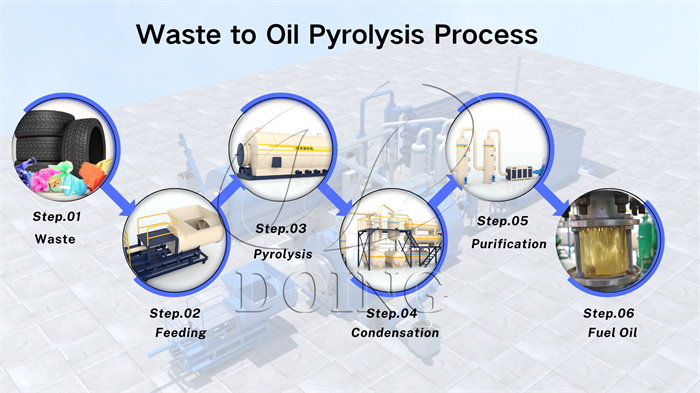
Understanding Pyrolysis
Pyrolysis is a thermal decomposition process occurring under oxygen-deprived conditions. This process involves heating organic materials to elevated temperatures (typically between 300°C and 600°C), breaking down complex molecular structures into simpler compounds. The outcome yields a mixture of solid, liquid, and gaseous products, with the liquid fraction being pyrolysis oil.
Types of Oil Obtained from Pyrolysis
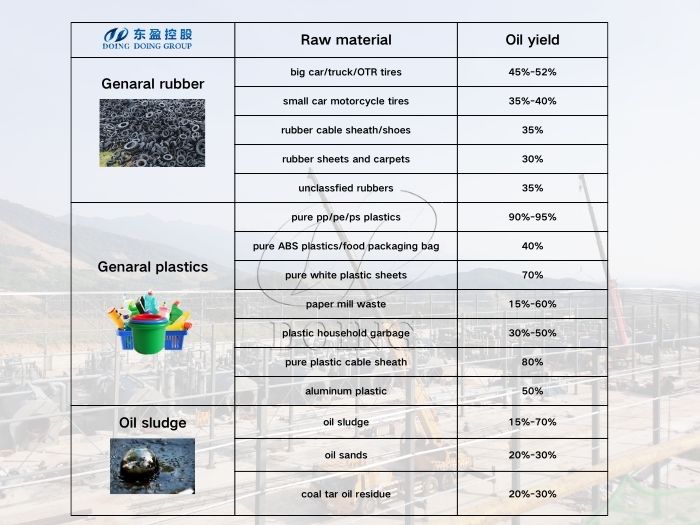
The type of oil obtained from pyrolysis primarily depends on the feedstock used. Below are common pyrolysis oil types:
Plastic Pyrolysis Oil
When waste plastics such as polyethylene (PE), polypropylene (PP), and polystyrene (PS) undergo pyrolysis, they decompose into light hydrocarbons. The resulting oil is a mixture of light and heavy fractions, which can be further refined into diesel and other fuel products. This oil is favoured for its high calorific value and low sulphur content, making it suitable for industrial heating applications and as a substitute for conventional fossil fuels.
Tyre Pyrolysis Oil
Comprising natural and synthetic rubber, waste tyres undergo pyrolysis to yield tyre pyrolysis oil. Refined and upgraded, this oil can be converted into fuels such as diesel and heavy fuel oil, finding extensive application in power generation units and industrial sectors. Renowned for its stability and compatibility, tyre pyrolysis oil offers a cleaner alternative to conventional fuels.
Oil Sludge Pyrolysis Oil
Oil sludge, a by-product of petroleum extraction and processing, is rich in petroleum hydrocarbons. Pyrolysis treatment yields oil products suitable for diverse industrial applications. This process also effectively mitigates environmental pollution by solidifying residual hazardous substances, including heavy metals.
Applications and Advantages of Pyrolysis Oil
Pyrolysis oil offers multiple advantages across various sectors:
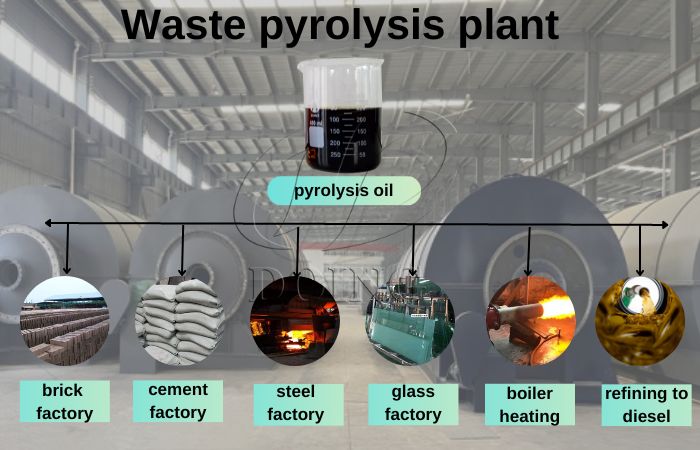
Energy production: Utilised for heating in boilers and furnaces, providing a cleaner energy alternative.
Biofuel production: Serves as feedstock for manufacturing renewable, environmentally friendly biofuels.
Industrial applications: Employed as a binder in the production of bio-coke within the metallurgical industry.
Environmental benefits: Reduces landfill waste and greenhouse gas emissions by converting waste into usable energy.
DOING's Commitment to Innovation
At DOING, we remain steadfastly committed to advancing pyrolysis technology to maximise both the yield and quality of petroleum products. Our state-of-the-art pyrolysis units are engineered for the efficient processing of diverse feedstocks, ensuring superior equipment performance with minimal environmental impact.

In conclusion, the pyrolysis process is a versatile and sustainable method for producing valuable oil products from waste materials. Whether it's plastic, tire or oil sludge pyrolysis, the resulting oils play a crucial role in meeting the growing demand for clean and renewable energy solutions.